Introduction
Automation requires motion to be considered as part of the complete process. Travel, load, speed, environment, and validation method together determine the appropriate architecture.
Why motion performance matters
Motion error becomes process risk when it affects alignment, measurement, quality, or cycle time. Useful performance therefore needs to be evaluated under the intended operating conditions.
Accuracy and repeatability answer different questions
Accuracy describes closeness to the commanded position. Repeatability describes how consistently the system returns to the same condition. A demanding application should define and verify both separately.
Where automation is applied
Product changeover
Positioning, interfaces, and validation are defined around the process.
Modular tooling
Positioning, interfaces, and validation are defined around the process.
Inspection cells
Positioning, interfaces, and validation are defined around the process.
Material handling
Positioning, interfaces, and validation are defined around the process.
Line expansion
Positioning, interfaces, and validation are defined around the process.
Key system requirements
- Structural rigidity
- Limits deformation and supports stable positioning under load.
- Feedback and control
- Compares actual position with the command and enables controlled correction.
- Thermal stability
- Makes thermal drift visible and manageable during extended cycles.
- Integration
- Coordinates motion, tooling, sensing, and control interfaces.
- Validation
- Defines how performance will be measured and accepted.
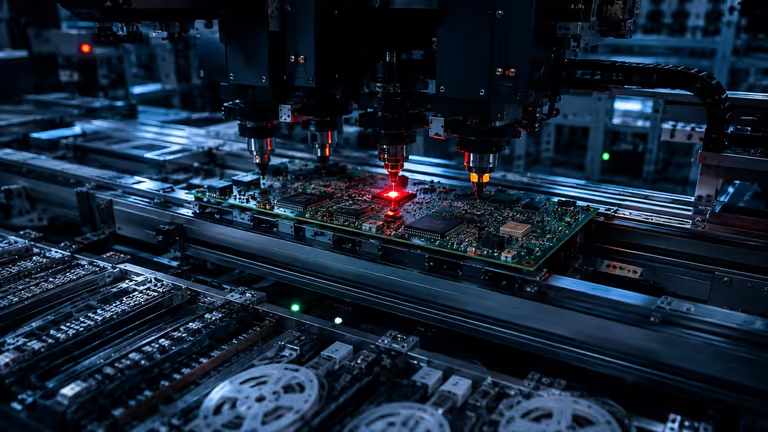
Choosing between components and complete systems
Components provide integration freedom. A complete system reduces coordination work when the application benefits from unified architecture and validation.
Motion components
- Flexible integration path
- Selection around each motion axis
- Supports custom mechanics and controls
Complete motion systems
- Coordinated multi-axis architecture
- Defined system interfaces
- Application-aligned validation
Conclusion
For automation, the strongest architecture connects motion requirements with the process, interfaces, and validation. This reduces assumptions and makes trade-offs clear before implementation.